The Question
Completing a process and helping a person are two different things. The Humanity Test puts that one question in front of every decision.
Everybody had dots. Nobody joined them.
A book, a talk and a free toolkit by Elaine White
What happens when every process is followed, and the person still isn't helped?
Permission to Help is a simple, human way for teams, organisations and communities to notice when someone is slipping through the gaps, and to feel able to act.
The question
Have we completed the process? Or have we actually helped the person?
Most organisations can answer the first half. Permission to Help is about the second half, and about the people who end up answering it on their own.
Before a case closes, ask one more question: is the person actually better off?
Three ideas
Completing a process and helping a person are two different things. The Humanity Test puts that one question in front of every decision.
Everybody had dots. Nobody joined them.
Vulnerability = Crisis ÷ Network
Two people hit the same crisis. One has a sofa, an advocate and someone to ring. The other has nobody.
The crisis isn't bigger. The network is smaller.
When an organisation steps back, the weight lands on the kindest person nearby. They pay in time, money and worry, and nobody records it.
Compassion should be supported by systems, not subsidised by individuals.
Free · about 5 minutes
If a crisis came tomorrow, what would catch you? Imagine losing your home, your income, your health or someone close. This test doesn't ask what's wrong with you. It asks what's around you.
The Permission to Help toolkit
Each tool takes one moment where people fall through the gaps and turns it into something a team can see, talk about and act on. Free to view, download and share, and a first look at what Permission to Help can do.
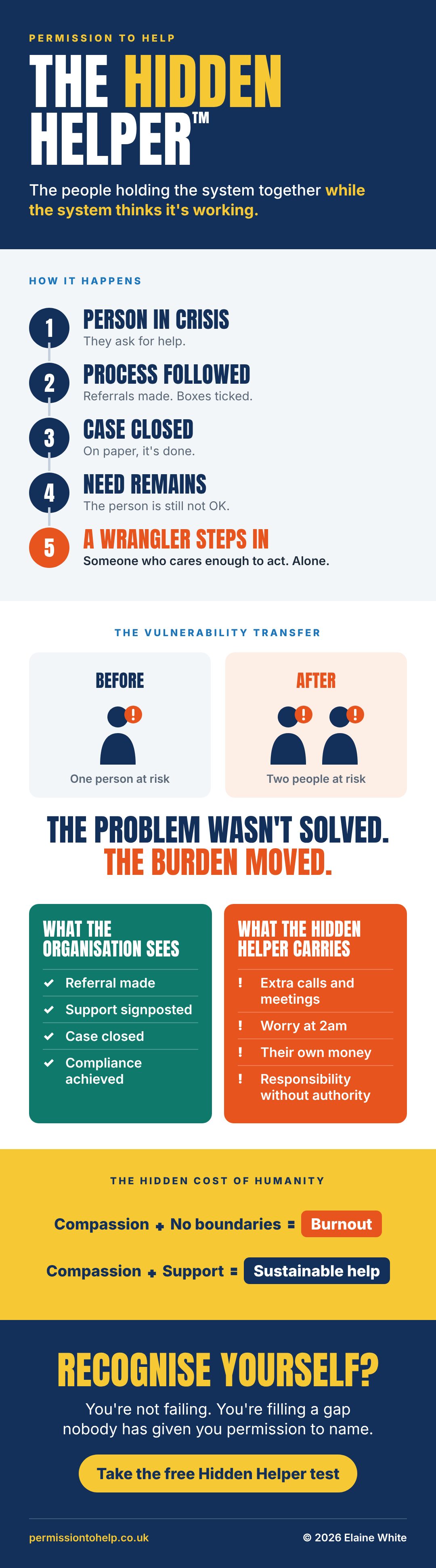
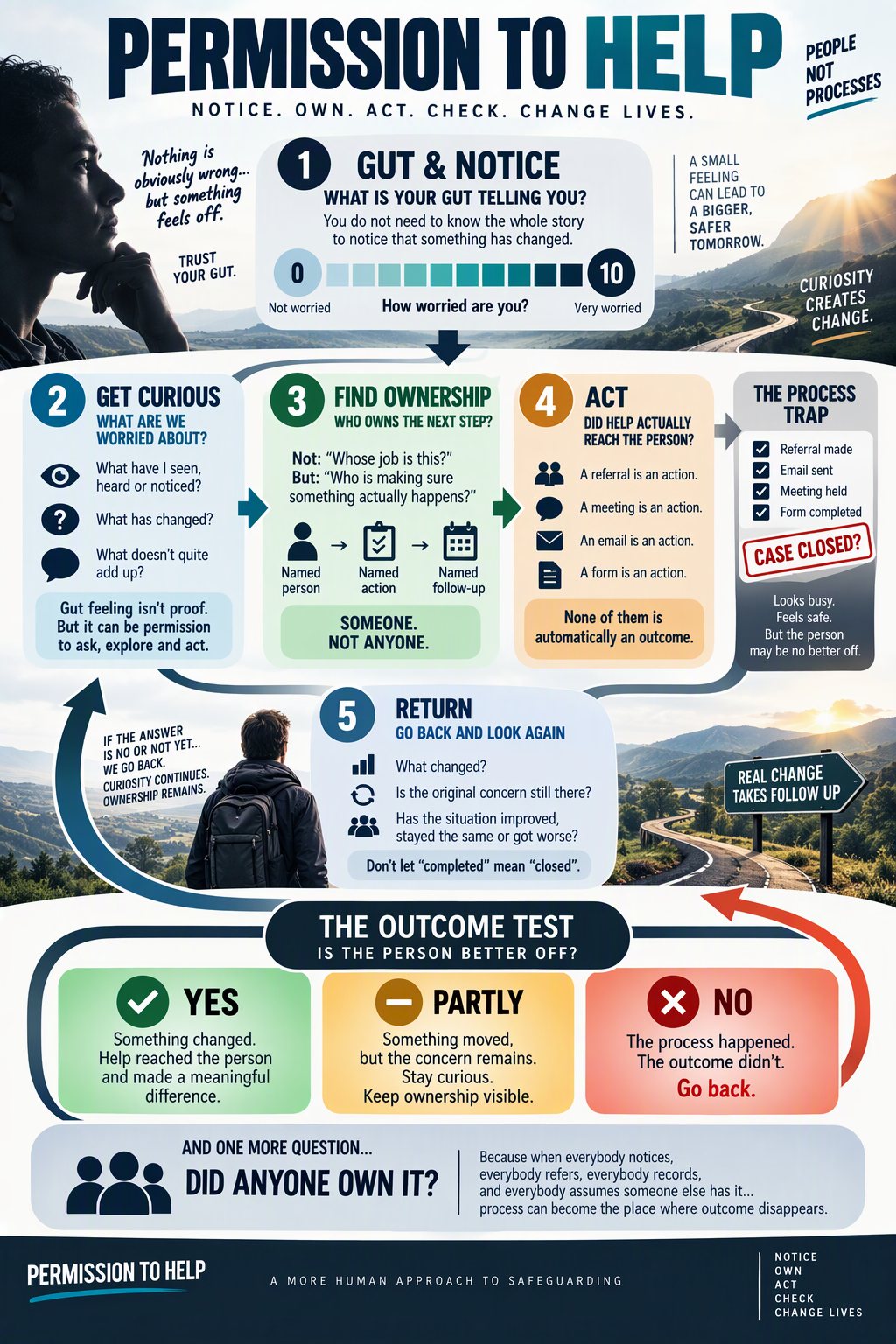
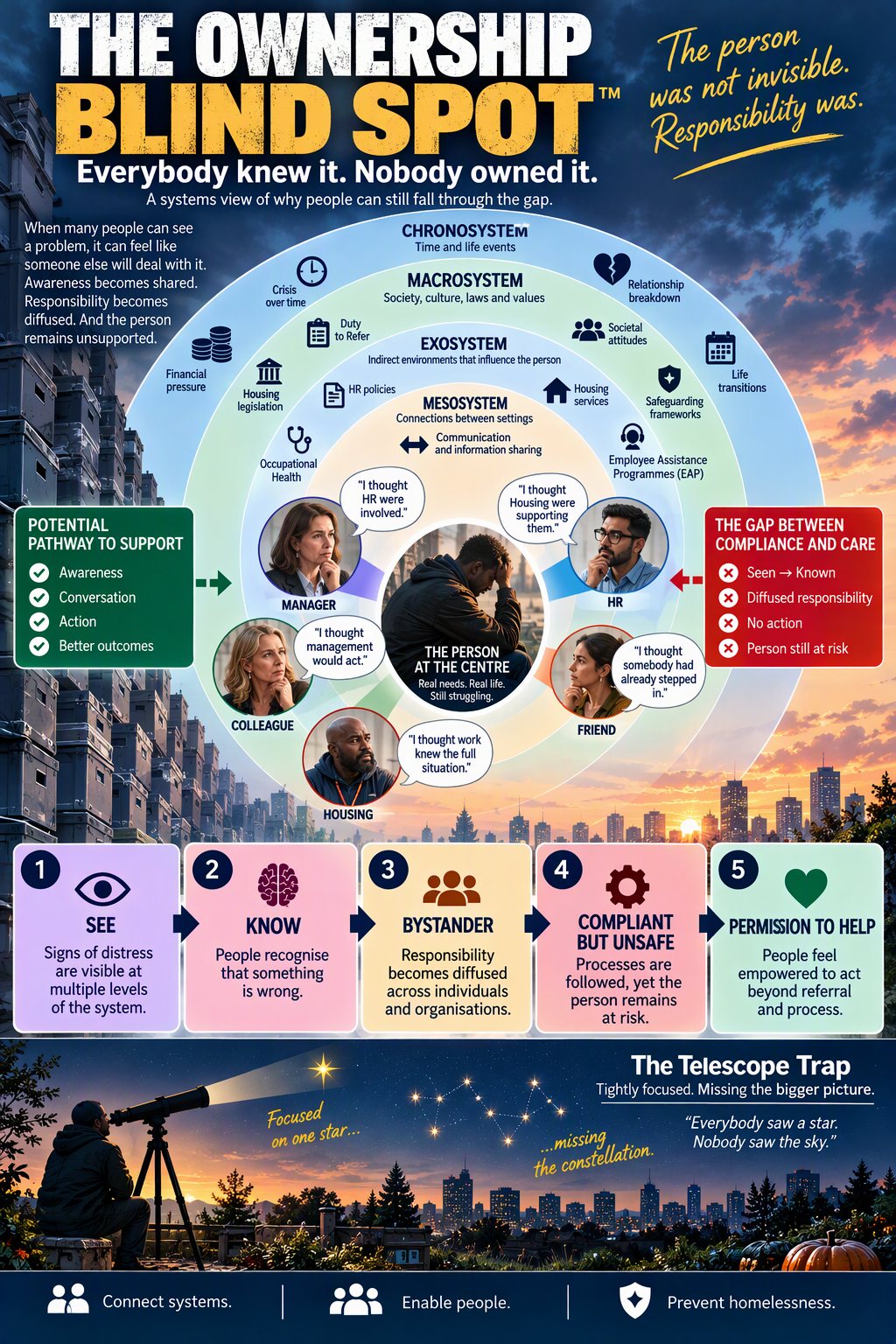
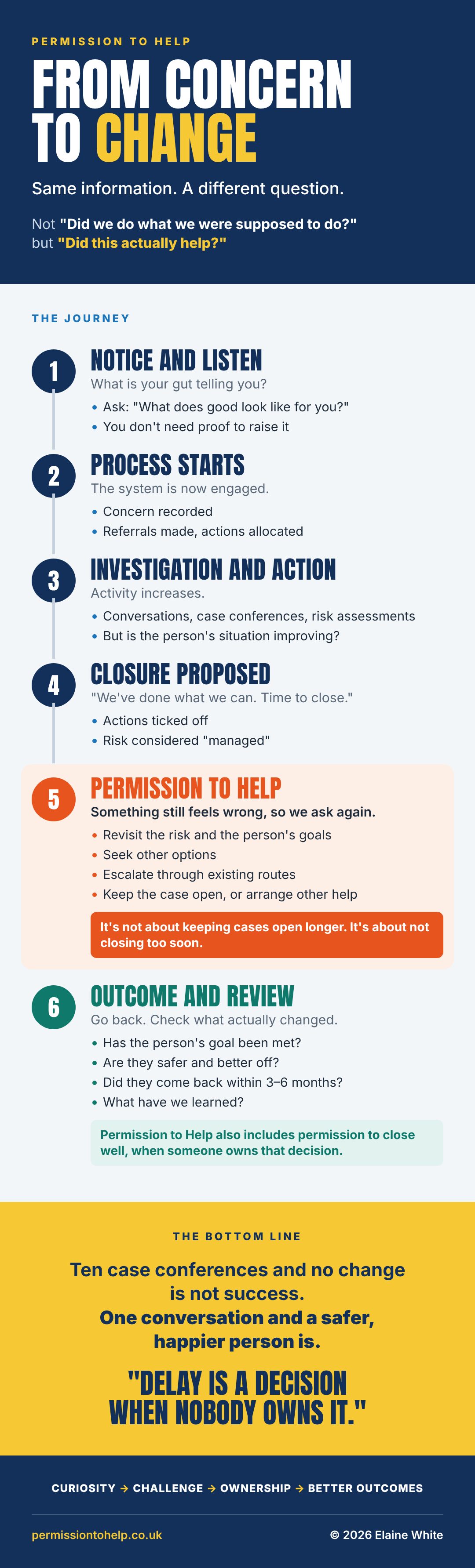
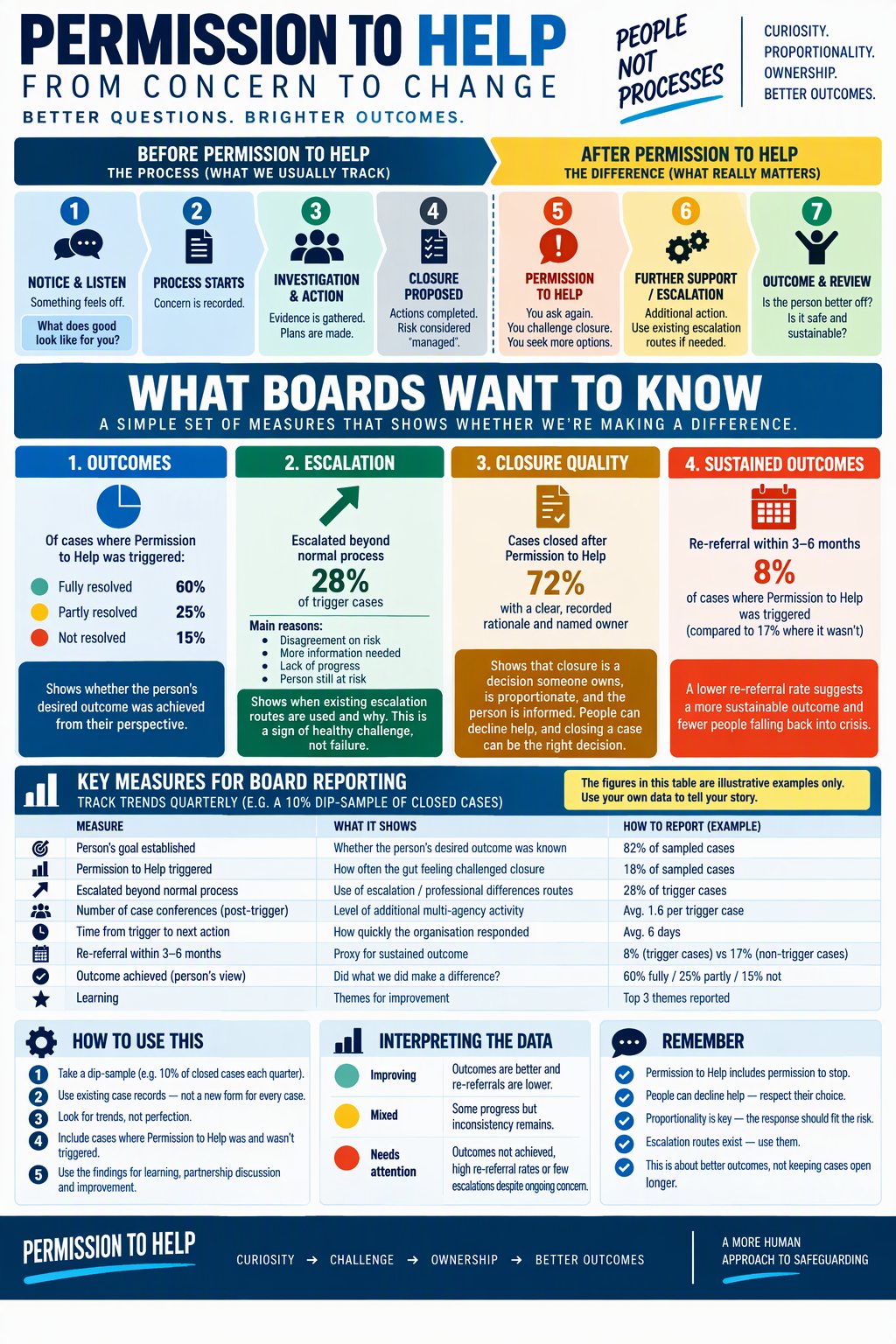
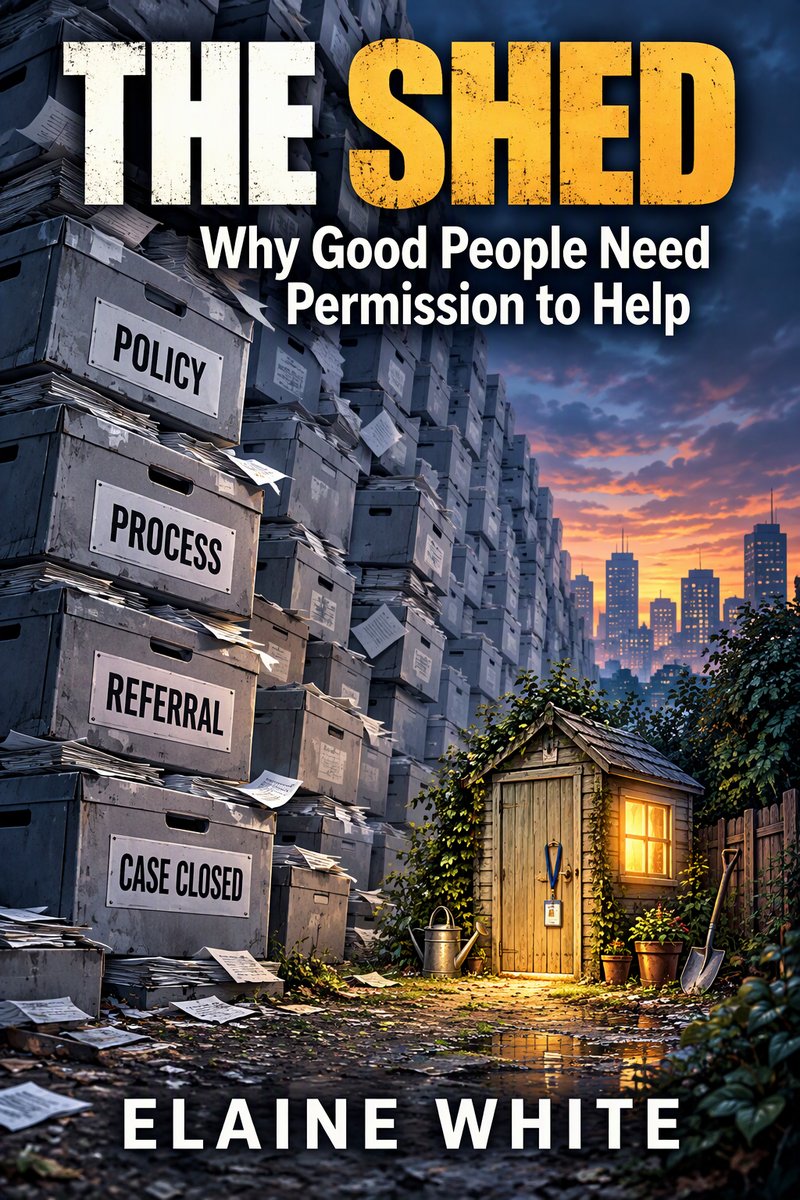
The story behind every tool, with an infographic facing every page. 40 pages, full colour.
Behind these free tools sits a growing toolkit for organisations that want to go further, shaped around your sector, your people and your processes.
Ask Elaine what's in the full toolkitThe answer
The problem is rarely that people don't care. It's that nobody has told them they're allowed to act.
Good people know what needs to happen. What they lack is permission.
Helping needs a limit built in, so kindness doesn't become a tax on the kindest person in the room.
You are not responsible for carrying people. You are responsible for making sure they are not carrying everything alone.
The book · out now
Paperback40 pagesFull colour£14.99
A short, illustrated fairytale for grown-ups, based on real events. Each page of story faces a practical infographic, so the whole model can be read in one sitting.
Written for leaders, managers and frontline teams in housing, homelessness, health, social care and the public sector. Anywhere people in crisis can fall through the gaps.
For organisations
Permission to Help gives teams a moment to pause before a case closes and ask one more question: did this actually help? Elaine works with organisations to put it into practice.
The story of The Shed and the ideas behind it, for conferences, summits and staff events.
A practical session for leadership teams, using the toolkit on real situations from their own organisation.
A mark for employers who back staff at risk of losing their home.
In developmentAbout the author
Elaine is a disability professional and writer from Birmingham. For more than twenty years she has designed and led services for disabled people and families, working across national sight-loss charities, local government and children's services.
Her projects have won awards. The Disability Day Centre Football League, which she set up, won the Sport category at the 2026 Community Inspiration Awards and Sporting Initiative of the Year at the Birmingham Awards 2026, where Elaine was also a finalist for Networker of the Year. Her teams have won several internal awards along the way.
She is also the founder of The Dead Slots, a new community interest company opening up stages for young and disabled performers.
Across her career she kept seeing the same thing: people without a firm safety net falling through into crisis, while good people around them could see what needed to happen and waited for permission to act. Permission to Help is her answer.
For talks, leadership sessions, the book or the Employer Charter.
hello@permissiontohelp.co.uk